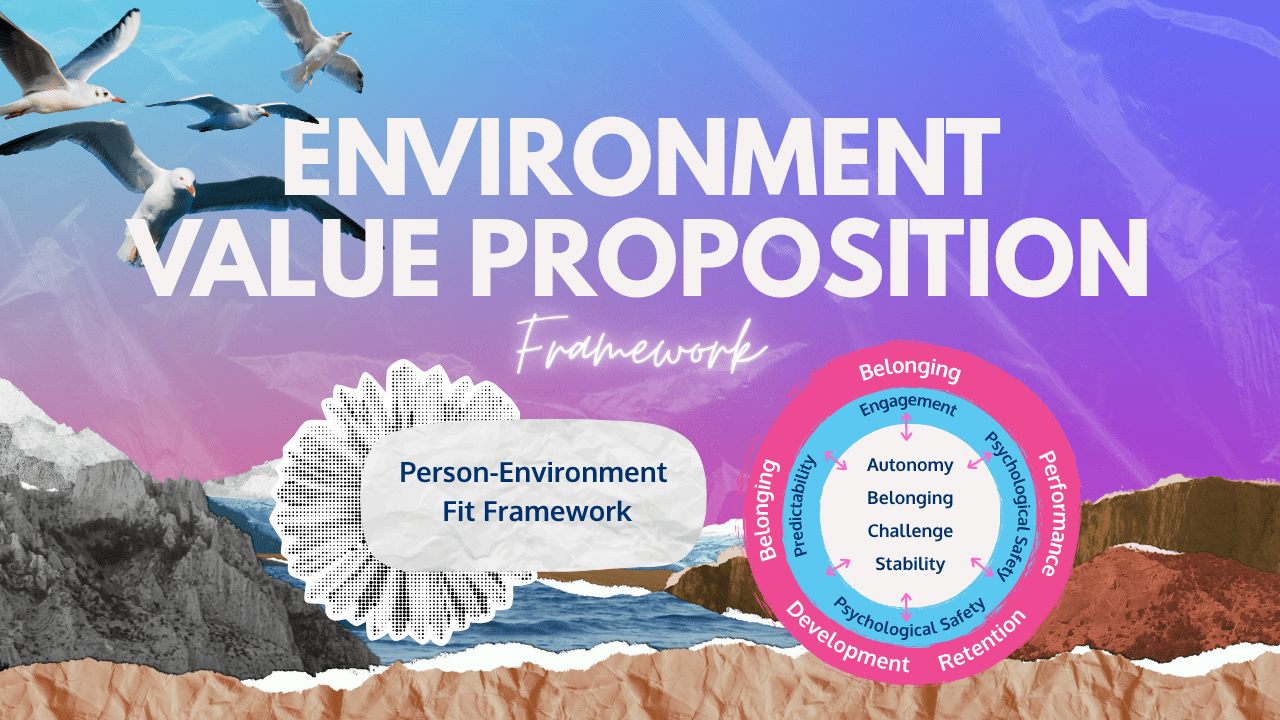
Lately, I’ve been hearing a lot of noise in the talent space about improving time-to-market and proving ROI when it comes to EVP development. And I’m not surprised. Research—and practitioner chatter—shows that EVP development is still a 6- to 12-month journey for many organizations (quite the range, right?). But here’s the kicker: even after the big “launch,” many teams struggle to get adoption from the business. Worse, they find themselves in rooms with execs, trying to explain the ROI with little more than brand campaign impressions or career site bounce rates to show for it. Recruitment marketing vendors tell us their clients face similar frustrations. Messaging needs to perform fast—especially with year-long media contracts on the line—but the EVP process isn’t moving at the pace the business needs. I get it. We lived through the same thing. A few years ago, our team at GBS took a hard look at this disconnect. We wanted to understand what was broken in the EVP process—and more importantly, why it kept breaking. And when we mapped it all out, the root cause was glaringly clear: the industry has been sold a backwards process. EVP ≠ CVP: Stop Treating EVP Like a Customer Proposition Somewhere along the way, EVP became a branding cousin to the Customer Value Proposition (CVP). On the surface, it makes sense—they both aim to communicate value. But here’s the thing: they are not the same. One sells a product. The other is meant to reflect a relationship. Here’s the issue with repackaging EVP into a neat little pitch to attract talent: it becomes just that—a pitch. But EVP is not designed to sell a job. It’s meant to hold a mirror the values alignment between a person and the environment in which they’ll work. When we treat EVP like a tagline or marketing copy,we reduce its strategic potential to just one piece of the funnel: attraction. That shortchanges the business. An effective EVP should be grounded in values, not verbiage. It should map what your environment gives (your mentor role—how values are lived out in the daily experience) and what your people get (their hero role—the opportunity to be their authentic selves, not a version they contort to “fit in”). If you do it right, they already fit in… and that’s kind of the point. EVP isn’t a campaign. It’s a commitment . Why We Call It an Environment Value Proposition Internally We’ve long referred to EVP as an “Employer Value Proposition,” but based on what we’ve seen across hundreds of client projects, a better term might be Environment Value Proposition. Here’s why that distinction matters: The workplace is a psychological environment just as much as it is a physical or cultural one. What employees value—autonomy, belonging, purpose, structure, innovation—is directly shaped by the environmental signals they receive. EVP should be the articulation of those signals, translated into values people can recognize, believe in, and align with. That’s why our framework centers on Person-Environment Fit (P-E Fit) —a well-researched construct in industrial-organizational psychology. Using models like Rauthmann’s (2020), we assess the dynamic between individuals and their working environment across dimensions like predictability, innovation, psychological safety, development, and value alignment. This isn’t guesswork. It’s evidence-based, actionable, and predictive of the outcomes we care most about: engagement, retention, and performance. The Danger of Starting with the Corporate Brand One of the biggest missteps we see in EVP projects is leading with the corporate or consumer brand. It makes sense on paper—after all, isn’t it easier to use what already exists? But here’s the truth: job seekers aren’t just customers. Their motivations are different. Their risks are higher. And the psychological drivers that lead to application, engagement, and retention don’t mirror buyer behavior. So when EVP is built as a spinoff of the corporate brand, the result is usually misalignment. And that misalignment? It costs real money . Let’s break it down: Disengagement costs companies roughly 34% of an employee’s salary in lost productivity—often well before someone leaves. Absenteeism drops by up to 37% when EVP efforts focus on psychological needs and values alignment. Voluntary turnover replacement costs average 50% of salary for entry-level roles, 150% for mid-level, and 250% for technical or executive roles. Retention of right-fit talent increases not just productivity, but also customer satisfaction, innovation velocity, and team cohesion. And more recent data backs this up: According to MIT Sloan Management Review (2022), when employees feel a strong sense of belonging: Job performance increases by 56% Sick days decrease by 75% Retention improves significantly The APA’s 2024 Work in America Survey found that employees in psychologically safe environments—where belonging and value alignment are high—are 10x less likely to describe their workplace as toxic, and 95% report feeling they belong (compared to just 69% in low-safety environments). Again, that misalignment? It costs real money and is eroding your budget.
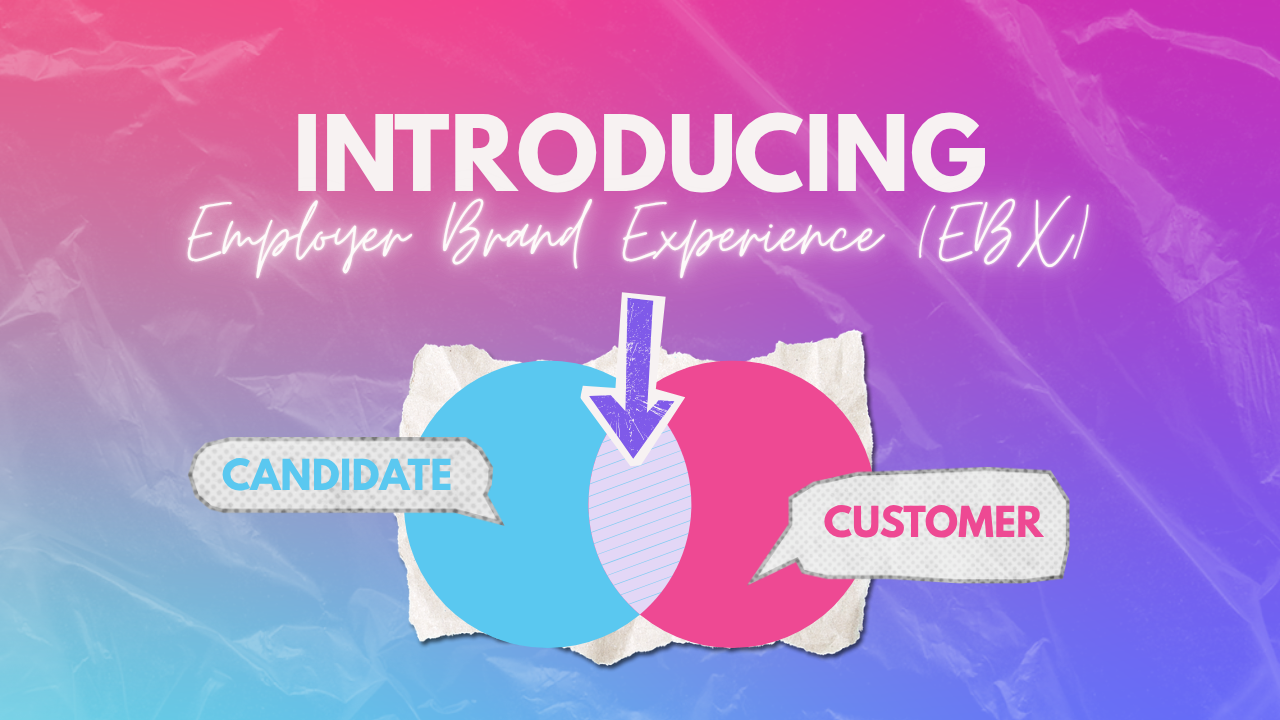
For many companies, there’s an often-overlooked overlap between the people you want to hire and the people you want to sell to. It’s not always direct—but it’s there. Sometimes they're the actual buyers. Sometimes they’re decision influencers. But either way, they’re watching. And if we’re being honest, most organizations still treat employer brand and recruitment marketing like they’re isolated from business performance. They're not. And it’s costing them—reputationally, financially, and competitively. What’s Broken—and What It’s Costing You In most companies, employer branding lives in HR, disconnected from brand strategy, customer experience, and financial outcomes. That’s a problem. Because what happens in your hiring funnel doesn’t stay there—it ripples through consumer sentiment, brand trust, and revenue opportunity. Disconnected candidate journeys → brand inconsistency → reputational risk. Poor candidate experiences → public backlash → customer loss. Siloed talent data → missed crossover insights → inefficient growth. TL;DR: Employer branding isn’t soft. When done right, it impacts hard business outcomes: CAC, retention, NPS, and even valuation. Curabitur placerat, nunc nec eleifend tincidunt, nibh nulla dictum turpis, vitae vulputate magna orci sed ex. Donec eleifend scelerisque leo nec eleifend. Vivamus volutpat dolor et velit fermentum aliquam sagittis felis vitae dictum aliquam. In hac habitasse platea dictumst ivamus malesuada tempor sem onec malesuada vestibulum accumsan. Cras sed odio vehicula, finibus ante at, fermentum libero. The Candidate–Customer Overlap Is Bigger Than You Think Let’s cut to it: employer brand still sits in the “nice to have” column at too many companies. TA is boxed in as a cost center. Recruitment marketing budgets? Usually the first to get axed in a downturn. But what if we reframed the work? If you recognize the candidate/customer overlap, your employer brand doesn’t just attract talent—it protects and amplifies revenue. Done right, it: 1. Reduces CAC (Customer Acquisition Cost): Great employer brand lowers friction and accelerates trust. 2. Strengthens brand equity: Even candidates you don’t hire can become advocates. 3. Unlocks loyalty loops: Former candidates can still buy from you, refer you, or influence buying decisions. Smart Framing: If candidates feel unseen or undervalued, they won’t just ghost your hiring process—they’ll ghost your brand. Revenue leakage from a bad hiring experience is real. TL;DR: Candidates who feel unseen or undervalued won’t just ghost your hiring process—they’ll ghost your brand. Studies have shown a positive correlation between strong employer branding and increased customer satisfaction, highlighting the impact of employee experience on customer loyalty. Introducing EBX: The Employer Brand Experience Framework This is where EBX comes in—our proprietary framework to unify brand, marketing, and talent into one measurable experience. EBX (Employer Brand Experience) isn’t just about better job ads or polished Glassdoor profiles. It’s the connective tissue between your external brand promise and the actual experience of moving through your hiring funnel. It’s how we bridge intent and impact—so candidates don’t just apply, they believe. And when they believe, they don’t just convert—they advocate. What EBX Is (and Isn't) 1. It is a revenue-aware framework that unites brand experience and hiring operations. 2. It is a way to apply lifecycle marketing and performance metrics to candidate engagement. 3. It is not a rebrand of EVP or a campaign wrapper. 4. It is not exclusive to HR—it’s a cross-functional strategy. EBX ties performance marketing to talent attraction by: 1. Mapping motivation to behavior (psychographics over demographics) 2. Aligning content with channel resonance (platform-specific AVPs) 3. Closing drop-off loops through lifecycle marketing 4. Re-engaging missed connections via retargeting and nurture flows Measuring success in revenue, not just reqs filled TL;DR: When EBX is activated, it delivers top-funnel efficiency, mid-funnel retention, and bottom-funnel loyalty—across both candidates and customers. Why EBX Matters Beyond HR Most business leaders agree: brand matters. Reputation matters. Trust matters. But here’s the blind spot—your employer brand impacts all three. EBX brings financial discipline to a part of the business that’s long been seen as "soft." It ties the experience of talent acquisition to measurable outcomes—customer retention, revenue efficiency, and even cost of capital through reputation impacts. This framework is designed not just for EB professionals, but for: 1. CPOs/CHROs who need to defend and drive investment in experience 2. CMOs who need to align brand trust across audiences 3. CFOs who want to understand the ROI of reputation and retention 4. COOs who care about funnel efficiency CEOs who want fewer silos and more strategic cohesion TL;DR: Think of EBX as the Net Promoter System for your employer brand—except we don’t stop at sentiment. We track how belief moves through your business, influences conversion, and impacts your P&L.; Where Brand and Talent Collide: Activating EBX 1. Build Shared Personas If your marketing team has ICPs (Ideal Customer Profiles), your TA team should have shared ITPs (Ideal Talent Profiles)—with crossover baked in. Ask: 1. Do your best hires look like your best customers? 2. Do you have candidates who already believe in your mission because they’ve experienced your product? 3. Can you use product loyalty as a sourcing signal? TL;DR: You can. And when you do, your funnel gets smarter. 2. Repurpose and Realign Content You’re sitting on a content mine—start mining it. 1. Turn EGC (employee-generated content) into brand stories 2. Use CSR, DEI, and purpose-led campaigns in recruiting 3. Translate customer storytelling into cultural proof points for candidates TL;DR: One video = customer proof + employer promise + pipeline accelerator. One narrative. Multiple conversions. 3. Treat Candidates Like Customers You wouldn't let a high-value lead go unanswered for 3 weeks. Why do that to a candidate? 1. Use CRM logic in TA (lifecycle, segmentation, triggered flows) 2. Map candidate journeys like buyer journeys 3. Respond like a brand that gives a damn TL;DR: Research from the Journal of Business Research shows candidate experience correlates with brand sentiment and purchase likelihood in shared audience pools (JBR, 2022). Measure What Matters—Revenue, Not Just Req Fills Most employer brand dashboards look like this: time-to-fill, source-of-hire, maybe a couple of social metrics. Fine—but incomplete. When your talent brand drives purchase behavior, your metrics have to scale up. With EBX, you measure: 1. NPS of the candidate journey 2. Post-application brand sentiment 3. Crossover conversion (candidates → customers, and vice versa) 4. Revenue impact of candidate experience on high-value audience segments TL;DR: EBX transforms employer branding from a qualitative exercise to a measurable business lever.

Recruitment’s dirty little secret isn’t ghosting—it’s erosion. Not of employer brand awareness. That’s table stakes. If you’re leading Talent Acquisition or employer brand right now, here’s what should give you pause: data presented at SIOP 2025 confirms what a lot of us have long suspected but couldn’t quantify until now. What we’re talking about is the slow, silent erosion of candidate confidence—and it’s happening during your assessment phase. Society for Industrial and Organizational Psychology (SIOP) 2025 brought receipts—and it’s time we stop designing experiences that undermine the very people we’re trying to attract.
Lately, I’ve been hearing a lot of noise in the talent space about improving time-to-market and proving ROI when it comes to EVP development. And I’m not surprised. Research—and practitioner chatter—shows that EVP development is still a 6- to 12-month journey for many organizations (quite the range, right?). But here’s the kicker: even after the big “launch,” many teams struggle to get adoption from the business. Worse, they find themselves in rooms with execs, trying to explain the ROI with little more than brand campaign impressions or career site bounce rates to show for it. Recruitment marketing vendors tell us their clients face similar frustrations. Messaging needs to perform fast—especially with year-long media contracts on the line—but the EVP process isn’t moving at the pace the business needs. I get it. We lived through the same thing. A few years ago, our team at GBS took a hard look at this disconnect. We wanted to understand what was broken in the EVP process—and more importantly, why it kept breaking. And when we mapped it all out, the root cause was glaringly clear: the industry has been sold a backwards process. EVP ≠ CVP: Stop Treating EVP Like a Customer Proposition Somewhere along the way, EVP became a branding cousin to the Customer Value Proposition (CVP). On the surface, it makes sense—they both aim to communicate value. But here’s the thing: they are not the same. One sells a product. The other is meant to reflect a relationship. Here’s the issue with repackaging EVP into a neat little pitch to attract talent: it becomes just that—a pitch. But EVP is not designed to sell a job. It’s meant to hold a mirror the values alignment between a person and the environment in which they’ll work. When we treat EVP like a tagline or marketing copy,we reduce its strategic potential to just one piece of the funnel: attraction. That shortchanges the business. An effective EVP should be grounded in values, not verbiage. It should map what your environment gives (your mentor role—how values are lived out in the daily experience) and what your people get (their hero role—the opportunity to be their authentic selves, not a version they contort to “fit in”). If you do it right, they already fit in… and that’s kind of the point. EVP isn’t a campaign. It’s a commitment . Why We Call It an Environment Value Proposition Internally We’ve long referred to EVP as an “Employer Value Proposition,” but based on what we’ve seen across hundreds of client projects, a better term might be Environment Value Proposition. Here’s why that distinction matters: The workplace is a psychological environment just as much as it is a physical or cultural one. What employees value—autonomy, belonging, purpose, structure, innovation—is directly shaped by the environmental signals they receive. EVP should be the articulation of those signals, translated into values people can recognize, believe in, and align with. That’s why our framework centers on Person-Environment Fit (P-E Fit) —a well-researched construct in industrial-organizational psychology. Using models like Rauthmann’s (2020), we assess the dynamic between individuals and their working environment across dimensions like predictability, innovation, psychological safety, development, and value alignment. This isn’t guesswork. It’s evidence-based, actionable, and predictive of the outcomes we care most about: engagement, retention, and performance. The Danger of Starting with the Corporate Brand One of the biggest missteps we see in EVP projects is leading with the corporate or consumer brand. It makes sense on paper—after all, isn’t it easier to use what already exists? But here’s the truth: job seekers aren’t just customers. Their motivations are different. Their risks are higher. And the psychological drivers that lead to application, engagement, and retention don’t mirror buyer behavior. So when EVP is built as a spinoff of the corporate brand, the result is usually misalignment. And that misalignment? It costs real money . Let’s break it down: Disengagement costs companies roughly 34% of an employee’s salary in lost productivity—often well before someone leaves. Absenteeism drops by up to 37% when EVP efforts focus on psychological needs and values alignment. Voluntary turnover replacement costs average 50% of salary for entry-level roles, 150% for mid-level, and 250% for technical or executive roles. Retention of right-fit talent increases not just productivity, but also customer satisfaction, innovation velocity, and team cohesion. And more recent data backs this up: According to MIT Sloan Management Review (2022), when employees feel a strong sense of belonging: Job performance increases by 56% Sick days decrease by 75% Retention improves significantly The APA’s 2024 Work in America Survey found that employees in psychologically safe environments—where belonging and value alignment are high—are 10x less likely to describe their workplace as toxic, and 95% report feeling they belong (compared to just 69% in low-safety environments). Again, that misalignment? It costs real money and is eroding your budget.
For many companies, there’s an often-overlooked overlap between the people you want to hire and the people you want to sell to. It’s not always direct—but it’s there. Sometimes they're the actual buyers. Sometimes they’re decision influencers. But either way, they’re watching. And if we’re being honest, most organizations still treat employer brand and recruitment marketing like they’re isolated from business performance. They're not. And it’s costing them—reputationally, financially, and competitively. What’s Broken—and What It’s Costing You In most companies, employer branding lives in HR, disconnected from brand strategy, customer experience, and financial outcomes. That’s a problem. Because what happens in your hiring funnel doesn’t stay there—it ripples through consumer sentiment, brand trust, and revenue opportunity. Disconnected candidate journeys → brand inconsistency → reputational risk. Poor candidate experiences → public backlash → customer loss. Siloed talent data → missed crossover insights → inefficient growth. TL;DR: Employer branding isn’t soft. When done right, it impacts hard business outcomes: CAC, retention, NPS, and even valuation. Curabitur placerat, nunc nec eleifend tincidunt, nibh nulla dictum turpis, vitae vulputate magna orci sed ex. Donec eleifend scelerisque leo nec eleifend. Vivamus volutpat dolor et velit fermentum aliquam sagittis felis vitae dictum aliquam. In hac habitasse platea dictumst ivamus malesuada tempor sem onec malesuada vestibulum accumsan. Cras sed odio vehicula, finibus ante at, fermentum libero. The Candidate–Customer Overlap Is Bigger Than You Think Let’s cut to it: employer brand still sits in the “nice to have” column at too many companies. TA is boxed in as a cost center. Recruitment marketing budgets? Usually the first to get axed in a downturn. But what if we reframed the work? If you recognize the candidate/customer overlap, your employer brand doesn’t just attract talent—it protects and amplifies revenue. Done right, it: 1. Reduces CAC (Customer Acquisition Cost): Great employer brand lowers friction and accelerates trust. 2. Strengthens brand equity: Even candidates you don’t hire can become advocates. 3. Unlocks loyalty loops: Former candidates can still buy from you, refer you, or influence buying decisions. Smart Framing: If candidates feel unseen or undervalued, they won’t just ghost your hiring process—they’ll ghost your brand. Revenue leakage from a bad hiring experience is real. TL;DR: Candidates who feel unseen or undervalued won’t just ghost your hiring process—they’ll ghost your brand. Studies have shown a positive correlation between strong employer branding and increased customer satisfaction, highlighting the impact of employee experience on customer loyalty. Introducing EBX: The Employer Brand Experience Framework This is where EBX comes in—our proprietary framework to unify brand, marketing, and talent into one measurable experience. EBX (Employer Brand Experience) isn’t just about better job ads or polished Glassdoor profiles. It’s the connective tissue between your external brand promise and the actual experience of moving through your hiring funnel. It’s how we bridge intent and impact—so candidates don’t just apply, they believe. And when they believe, they don’t just convert—they advocate. What EBX Is (and Isn't) 1. It is a revenue-aware framework that unites brand experience and hiring operations. 2. It is a way to apply lifecycle marketing and performance metrics to candidate engagement. 3. It is not a rebrand of EVP or a campaign wrapper. 4. It is not exclusive to HR—it’s a cross-functional strategy. EBX ties performance marketing to talent attraction by: 1. Mapping motivation to behavior (psychographics over demographics) 2. Aligning content with channel resonance (platform-specific AVPs) 3. Closing drop-off loops through lifecycle marketing 4. Re-engaging missed connections via retargeting and nurture flows Measuring success in revenue, not just reqs filled TL;DR: When EBX is activated, it delivers top-funnel efficiency, mid-funnel retention, and bottom-funnel loyalty—across both candidates and customers. Why EBX Matters Beyond HR Most business leaders agree: brand matters. Reputation matters. Trust matters. But here’s the blind spot—your employer brand impacts all three. EBX brings financial discipline to a part of the business that’s long been seen as "soft." It ties the experience of talent acquisition to measurable outcomes—customer retention, revenue efficiency, and even cost of capital through reputation impacts. This framework is designed not just for EB professionals, but for: 1. CPOs/CHROs who need to defend and drive investment in experience 2. CMOs who need to align brand trust across audiences 3. CFOs who want to understand the ROI of reputation and retention 4. COOs who care about funnel efficiency CEOs who want fewer silos and more strategic cohesion TL;DR: Think of EBX as the Net Promoter System for your employer brand—except we don’t stop at sentiment. We track how belief moves through your business, influences conversion, and impacts your P&L.; Where Brand and Talent Collide: Activating EBX 1. Build Shared Personas If your marketing team has ICPs (Ideal Customer Profiles), your TA team should have shared ITPs (Ideal Talent Profiles)—with crossover baked in. Ask: 1. Do your best hires look like your best customers? 2. Do you have candidates who already believe in your mission because they’ve experienced your product? 3. Can you use product loyalty as a sourcing signal? TL;DR: You can. And when you do, your funnel gets smarter. 2. Repurpose and Realign Content You’re sitting on a content mine—start mining it. 1. Turn EGC (employee-generated content) into brand stories 2. Use CSR, DEI, and purpose-led campaigns in recruiting 3. Translate customer storytelling into cultural proof points for candidates TL;DR: One video = customer proof + employer promise + pipeline accelerator. One narrative. Multiple conversions. 3. Treat Candidates Like Customers You wouldn't let a high-value lead go unanswered for 3 weeks. Why do that to a candidate? 1. Use CRM logic in TA (lifecycle, segmentation, triggered flows) 2. Map candidate journeys like buyer journeys 3. Respond like a brand that gives a damn TL;DR: Research from the Journal of Business Research shows candidate experience correlates with brand sentiment and purchase likelihood in shared audience pools (JBR, 2022). Measure What Matters—Revenue, Not Just Req Fills Most employer brand dashboards look like this: time-to-fill, source-of-hire, maybe a couple of social metrics. Fine—but incomplete. When your talent brand drives purchase behavior, your metrics have to scale up. With EBX, you measure: 1. NPS of the candidate journey 2. Post-application brand sentiment 3. Crossover conversion (candidates → customers, and vice versa) 4. Revenue impact of candidate experience on high-value audience segments TL;DR: EBX transforms employer branding from a qualitative exercise to a measurable business lever.
Recruitment’s dirty little secret isn’t ghosting—it’s erosion. Not of employer brand awareness. That’s table stakes. If you’re leading Talent Acquisition or employer brand right now, here’s what should give you pause: data presented at SIOP 2025 confirms what a lot of us have long suspected but couldn’t quantify until now. What we’re talking about is the slow, silent erosion of candidate confidence—and it’s happening during your assessment phase. Society for Industrial and Organizational Psychology (SIOP) 2025 brought receipts—and it’s time we stop designing experiences that undermine the very people we’re trying to attract.
Lately, I’ve been hearing a lot of noise in the talent space about improving time-to-market and proving ROI when it comes to EVP development. And I’m not surprised. Research—and practitioner chatter—shows that EVP development is still a 6- to 12-month journey for many organizations (quite the range, right?). But here’s the kicker: even after the big “launch,” many teams struggle to get adoption from the business. Worse, they find themselves in rooms with execs, trying to explain the ROI with little more than brand campaign impressions or career site bounce rates to show for it. Recruitment marketing vendors tell us their clients face similar frustrations. Messaging needs to perform fast—especially with year-long media contracts on the line—but the EVP process isn’t moving at the pace the business needs. I get it. We lived through the same thing. A few years ago, our team at GBS took a hard look at this disconnect. We wanted to understand what was broken in the EVP process—and more importantly, why it kept breaking. And when we mapped it all out, the root cause was glaringly clear: the industry has been sold a backwards process. EVP ≠ CVP: Stop Treating EVP Like a Customer Proposition Somewhere along the way, EVP became a branding cousin to the Customer Value Proposition (CVP). On the surface, it makes sense—they both aim to communicate value. But here’s the thing: they are not the same. One sells a product. The other is meant to reflect a relationship. Here’s the issue with repackaging EVP into a neat little pitch to attract talent: it becomes just that—a pitch. But EVP is not designed to sell a job. It’s meant to hold a mirror the values alignment between a person and the environment in which they’ll work. When we treat EVP like a tagline or marketing copy,we reduce its strategic potential to just one piece of the funnel: attraction. That shortchanges the business. An effective EVP should be grounded in values, not verbiage. It should map what your environment gives (your mentor role—how values are lived out in the daily experience) and what your people get (their hero role—the opportunity to be their authentic selves, not a version they contort to “fit in”). If you do it right, they already fit in… and that’s kind of the point. EVP isn’t a campaign. It’s a commitment . Why We Call It an Environment Value Proposition Internally We’ve long referred to EVP as an “Employer Value Proposition,” but based on what we’ve seen across hundreds of client projects, a better term might be Environment Value Proposition. Here’s why that distinction matters: The workplace is a psychological environment just as much as it is a physical or cultural one. What employees value—autonomy, belonging, purpose, structure, innovation—is directly shaped by the environmental signals they receive. EVP should be the articulation of those signals, translated into values people can recognize, believe in, and align with. That’s why our framework centers on Person-Environment Fit (P-E Fit) —a well-researched construct in industrial-organizational psychology. Using models like Rauthmann’s (2020), we assess the dynamic between individuals and their working environment across dimensions like predictability, innovation, psychological safety, development, and value alignment. This isn’t guesswork. It’s evidence-based, actionable, and predictive of the outcomes we care most about: engagement, retention, and performance. The Danger of Starting with the Corporate Brand One of the biggest missteps we see in EVP projects is leading with the corporate or consumer brand. It makes sense on paper—after all, isn’t it easier to use what already exists? But here’s the truth: job seekers aren’t just customers. Their motivations are different. Their risks are higher. And the psychological drivers that lead to application, engagement, and retention don’t mirror buyer behavior. So when EVP is built as a spinoff of the corporate brand, the result is usually misalignment. And that misalignment? It costs real money . Let’s break it down: Disengagement costs companies roughly 34% of an employee’s salary in lost productivity—often well before someone leaves. Absenteeism drops by up to 37% when EVP efforts focus on psychological needs and values alignment. Voluntary turnover replacement costs average 50% of salary for entry-level roles, 150% for mid-level, and 250% for technical or executive roles. Retention of right-fit talent increases not just productivity, but also customer satisfaction, innovation velocity, and team cohesion. And more recent data backs this up: According to MIT Sloan Management Review (2022), when employees feel a strong sense of belonging: Job performance increases by 56% Sick days decrease by 75% Retention improves significantly The APA’s 2024 Work in America Survey found that employees in psychologically safe environments—where belonging and value alignment are high—are 10x less likely to describe their workplace as toxic, and 95% report feeling they belong (compared to just 69% in low-safety environments). Again, that misalignment? It costs real money and is eroding your budget.
For many companies, there’s an often-overlooked overlap between the people you want to hire and the people you want to sell to. It’s not always direct—but it’s there. Sometimes they're the actual buyers. Sometimes they’re decision influencers. But either way, they’re watching. And if we’re being honest, most organizations still treat employer brand and recruitment marketing like they’re isolated from business performance. They're not. And it’s costing them—reputationally, financially, and competitively. What’s Broken—and What It’s Costing You In most companies, employer branding lives in HR, disconnected from brand strategy, customer experience, and financial outcomes. That’s a problem. Because what happens in your hiring funnel doesn’t stay there—it ripples through consumer sentiment, brand trust, and revenue opportunity. Disconnected candidate journeys → brand inconsistency → reputational risk. Poor candidate experiences → public backlash → customer loss. Siloed talent data → missed crossover insights → inefficient growth. TL;DR: Employer branding isn’t soft. When done right, it impacts hard business outcomes: CAC, retention, NPS, and even valuation. Curabitur placerat, nunc nec eleifend tincidunt, nibh nulla dictum turpis, vitae vulputate magna orci sed ex. Donec eleifend scelerisque leo nec eleifend. Vivamus volutpat dolor et velit fermentum aliquam sagittis felis vitae dictum aliquam. In hac habitasse platea dictumst ivamus malesuada tempor sem onec malesuada vestibulum accumsan. Cras sed odio vehicula, finibus ante at, fermentum libero. The Candidate–Customer Overlap Is Bigger Than You Think Let’s cut to it: employer brand still sits in the “nice to have” column at too many companies. TA is boxed in as a cost center. Recruitment marketing budgets? Usually the first to get axed in a downturn. But what if we reframed the work? If you recognize the candidate/customer overlap, your employer brand doesn’t just attract talent—it protects and amplifies revenue. Done right, it: 1. Reduces CAC (Customer Acquisition Cost): Great employer brand lowers friction and accelerates trust. 2. Strengthens brand equity: Even candidates you don’t hire can become advocates. 3. Unlocks loyalty loops: Former candidates can still buy from you, refer you, or influence buying decisions. Smart Framing: If candidates feel unseen or undervalued, they won’t just ghost your hiring process—they’ll ghost your brand. Revenue leakage from a bad hiring experience is real. TL;DR: Candidates who feel unseen or undervalued won’t just ghost your hiring process—they’ll ghost your brand. Studies have shown a positive correlation between strong employer branding and increased customer satisfaction, highlighting the impact of employee experience on customer loyalty. Introducing EBX: The Employer Brand Experience Framework This is where EBX comes in—our proprietary framework to unify brand, marketing, and talent into one measurable experience. EBX (Employer Brand Experience) isn’t just about better job ads or polished Glassdoor profiles. It’s the connective tissue between your external brand promise and the actual experience of moving through your hiring funnel. It’s how we bridge intent and impact—so candidates don’t just apply, they believe. And when they believe, they don’t just convert—they advocate. What EBX Is (and Isn't) 1. It is a revenue-aware framework that unites brand experience and hiring operations. 2. It is a way to apply lifecycle marketing and performance metrics to candidate engagement. 3. It is not a rebrand of EVP or a campaign wrapper. 4. It is not exclusive to HR—it’s a cross-functional strategy. EBX ties performance marketing to talent attraction by: 1. Mapping motivation to behavior (psychographics over demographics) 2. Aligning content with channel resonance (platform-specific AVPs) 3. Closing drop-off loops through lifecycle marketing 4. Re-engaging missed connections via retargeting and nurture flows Measuring success in revenue, not just reqs filled TL;DR: When EBX is activated, it delivers top-funnel efficiency, mid-funnel retention, and bottom-funnel loyalty—across both candidates and customers. Why EBX Matters Beyond HR Most business leaders agree: brand matters. Reputation matters. Trust matters. But here’s the blind spot—your employer brand impacts all three. EBX brings financial discipline to a part of the business that’s long been seen as "soft." It ties the experience of talent acquisition to measurable outcomes—customer retention, revenue efficiency, and even cost of capital through reputation impacts. This framework is designed not just for EB professionals, but for: 1. CPOs/CHROs who need to defend and drive investment in experience 2. CMOs who need to align brand trust across audiences 3. CFOs who want to understand the ROI of reputation and retention 4. COOs who care about funnel efficiency CEOs who want fewer silos and more strategic cohesion TL;DR: Think of EBX as the Net Promoter System for your employer brand—except we don’t stop at sentiment. We track how belief moves through your business, influences conversion, and impacts your P&L.; Where Brand and Talent Collide: Activating EBX 1. Build Shared Personas If your marketing team has ICPs (Ideal Customer Profiles), your TA team should have shared ITPs (Ideal Talent Profiles)—with crossover baked in. Ask: 1. Do your best hires look like your best customers? 2. Do you have candidates who already believe in your mission because they’ve experienced your product? 3. Can you use product loyalty as a sourcing signal? TL;DR: You can. And when you do, your funnel gets smarter. 2. Repurpose and Realign Content You’re sitting on a content mine—start mining it. 1. Turn EGC (employee-generated content) into brand stories 2. Use CSR, DEI, and purpose-led campaigns in recruiting 3. Translate customer storytelling into cultural proof points for candidates TL;DR: One video = customer proof + employer promise + pipeline accelerator. One narrative. Multiple conversions. 3. Treat Candidates Like Customers You wouldn't let a high-value lead go unanswered for 3 weeks. Why do that to a candidate? 1. Use CRM logic in TA (lifecycle, segmentation, triggered flows) 2. Map candidate journeys like buyer journeys 3. Respond like a brand that gives a damn TL;DR: Research from the Journal of Business Research shows candidate experience correlates with brand sentiment and purchase likelihood in shared audience pools (JBR, 2022). Measure What Matters—Revenue, Not Just Req Fills Most employer brand dashboards look like this: time-to-fill, source-of-hire, maybe a couple of social metrics. Fine—but incomplete. When your talent brand drives purchase behavior, your metrics have to scale up. With EBX, you measure: 1. NPS of the candidate journey 2. Post-application brand sentiment 3. Crossover conversion (candidates → customers, and vice versa) 4. Revenue impact of candidate experience on high-value audience segments TL;DR: EBX transforms employer branding from a qualitative exercise to a measurable business lever.