

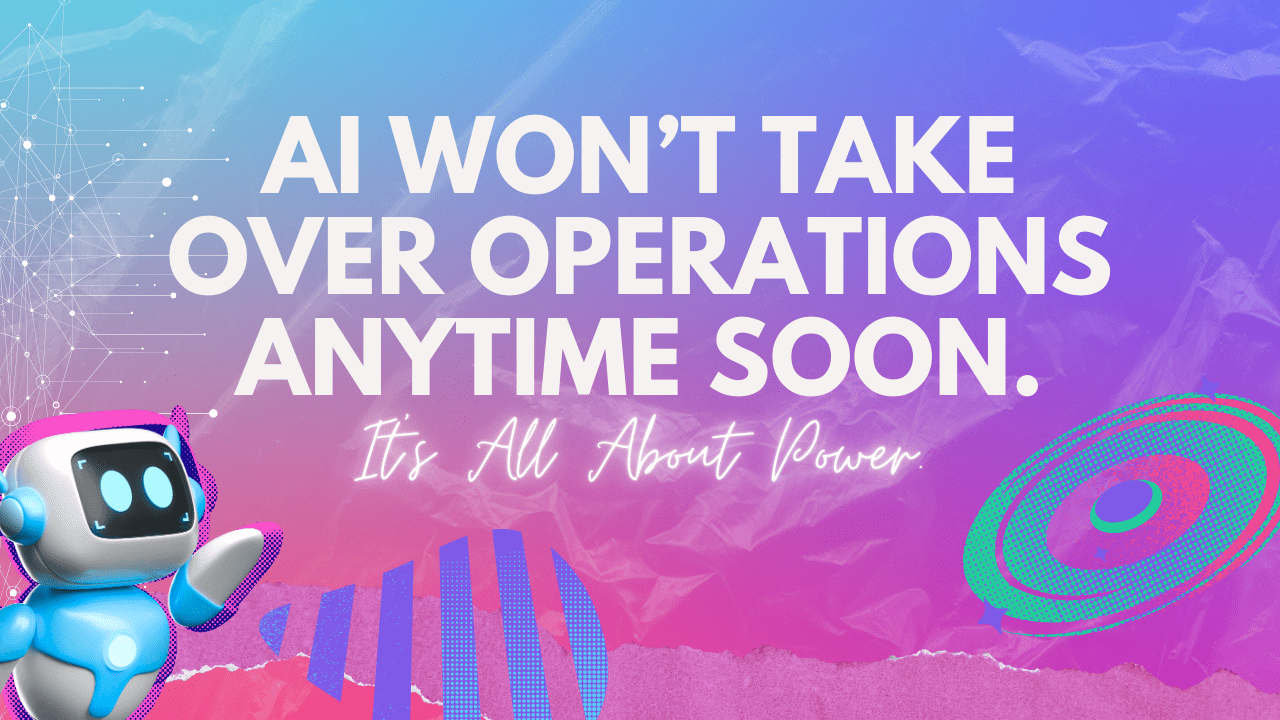
Suppose you believe everything you read on LinkedIn. In that case, AI is about to replace half your workforce, reinvent your go-to-market strategy, cure indecision, and do it all while writing perfect emails with zero typos. And don’t get me wrong, I’m an optimist when it comes to AI. I’ve seen firsthand how it can cut noise, speed up decisions, and automate the things we all hate doing. But there’s one tiny, inconvenient problem no one seems to be talking about. The power gap. As in, literal electricity. The AI Hype Train Has a Flat Tire (I know, trains don’t have tires. Just go with it.) We’ve been here before. New tech shows up, the early adopters build cool stuff, the consultants descend with acronyms and bold predictions, and someone announces that “the spreadsheet is dead.” But this time, there’s a twist. AI isn’t just software. It’s a software that eats hardware for breakfast. And that hardware eats a lot of electricity. Let’s math! In 2023, U.S. data centers consumed roughly 176 terawatt-hours (TWh) of electricity. For perspective, that’s about 4.4% of the entire U.S. power grid just for the data centers. Now fast forward to projections for 2028: that number could triple to between 325 and 580 TWh , or up to 12% of the grid . Much of that spike is coming from AI workloads. This isn’t theoretical. This is what happens when you train and run massive language models, fine-tune vertical instances, and let them spin 24/7 across global operations. Every time you ask an AI to “summarize this document,” or “generate 20 variations of ad copy,” it hits a GPU in a warehouse that’s pulling more juice than your average Walmart. And that, folks, is where the revolution slows down. Why Power Is the New Bottleneck We’ve been trained to think about AI limitations in terms of accuracy, bias, explainability, or hallucinations. Fair points, all of them. But the real choke point? It’s much less philosophical and way more operational. It’s the infrastructure. Let me give you a field-level view. Utility companies across the U.S. are now getting so many data center requests, each demanding energy on par with a small city, that they’re overwhelmed. The largest power grid in the country, PJM Interconnection, has seen data center demand spike so fast that they’re having to deny or delay new connections. Not because they don’t want to help tech companies, but because there’s no room on the grid to do it. PJM Interconnection has significantly increased its annual load growth forecast to 2.4%, primarily due to the rapid expansion of data centers and electrification efforts, up from the previous forecast of 0.8%. A study by Synapse Energy Economics projects that data center electricity consumption within PJM’s territory will escalate from 50 TWh in 2023 to 350 TWh by 2040. This would represent an increase from 6% to 24% of PJM’s total load. The rapid development of AI data centers is intensifying concerns about the U.S. electrical grid’s capacity. PJM Interconnection, covering 13 states and the District of Columbia, is experiencing significant pressures, especially in Virginia, where a large concentration of data centers is located. PJM’s recent capacity auction saw prices increase by over 800%, reflecting rising demand and shrinking supply. So while tech leaders are busy talking about how AI will “run the company of the future,” they might want to talk to their facilities team. You can’t run LLMs without juice. And the juice is running dry. This Isn’t Just a Tech Problem If you’re reading this from HR, Ops, or Talent, you might be thinking, “That’s interesting, but that’s not my problem.” But yeah, it is. If you’re responsible for implementing AI into business workflows, like recruiting, onboarding, workforce planning, scheduling, or training, then this limitation is yours, too. You’re betting on systems that assume infinite scale, when the back-end infrastructure is telling a different story. Take employer branding or recruiting automation. AI makes it easy to analyze a hundred thousand résumés, generate job posts, screen candidates, and schedule interviews. But multiply that across industries, companies, and geographies, and the load isn’t “automated,” it’s just outsourced to a server that’s burning fossil fuel at an alarming rate. If your vendor says their product is AI-powered, ask them two things: Where’s the model running? What’s the compute cost per transaction? Because if they’re scaling without energy awareness, you may be setting your systems up for a very slow fail. The False Promise of “Fully Automated” Here’s the other issue no one wants to say out loud. The vision of “AI doing everything for you” isn’t just flawed because of the computational limits. It’s flawed because AI systems need human input to stay useful. They drift. They degrade. They hallucinate. And they do all this faster as you scale them. Combine that with the power demands, and you’ve got a recipe for disaster if you try to fully automate complex operations without a plan for monitoring, validation, or resource availability . In other words: – AI won’t run ops without power. – Ops can’t run AI without oversight. – No one seems to be budgeting for either one. So, What Do You Do? I’m not here to tell you to stop using AI. In many ways, it has replaced the way we used to research and problem-solve, so it is too useful a tool to shed. But I’m suggesting that it’s time for operational leaders to: 1. Rethink “Scale” Ask whether your AI projects need to run everywhere all the time. Some use cases don’t need real-time answers. Some tasks don’t need to be run through a 70-billion parameter model. Simpler models, on-device compute, and scheduled batch jobs are all ways to reduce your footprint and your costs. 2. Audit Your AI Workflows Just like data hygiene matters in your ATS, AI hygiene matters too. Start tracking where AI is being used, how often, and what it costs in terms of compute. Ask your vendors about sustainability practices. If they look at you like you’re speaking Dutch, start looking for new vendors. 3. Partner with IT and Facilities This isn’t just a tech issue. This is an operational risk. Talk to your infrastructure team about what’s possible (and what’s not) in the next 2–5 years. Power, cooling, latency, and reliability all matter more than whatever the marketing deck says. 4. Build with Redundancy What happens when the model is slow, the API limit is hit, or the power flickers? If the answer is “everything breaks,” you don’t have a resilient system. You have a house of cards with a nice interface. 5. Push for Smart Regulation The conversation around AI regulation usually gets stuck in debates about ethics or jobs. But the infrastructure side needs just as much attention. Energy planning, clean grid investment, and better reporting requirements for cloud providers should all be on the radar of any company betting big on AI. Gen AI isn’t a magic trick. It’s a system of pipes, wires, chips, and models that consume real energy and generate real waste. The more we ask it to do, the more we have to be honest about what it costs, and whether we’re building sustainable systems to feed the beast. The future of work might be powered by AI. But the future of AI is going to depend on who pays the power bill. And if we’re not careful, we’ll build faster than we can sustain, and the lights might flicker out before the revolution can be televised.
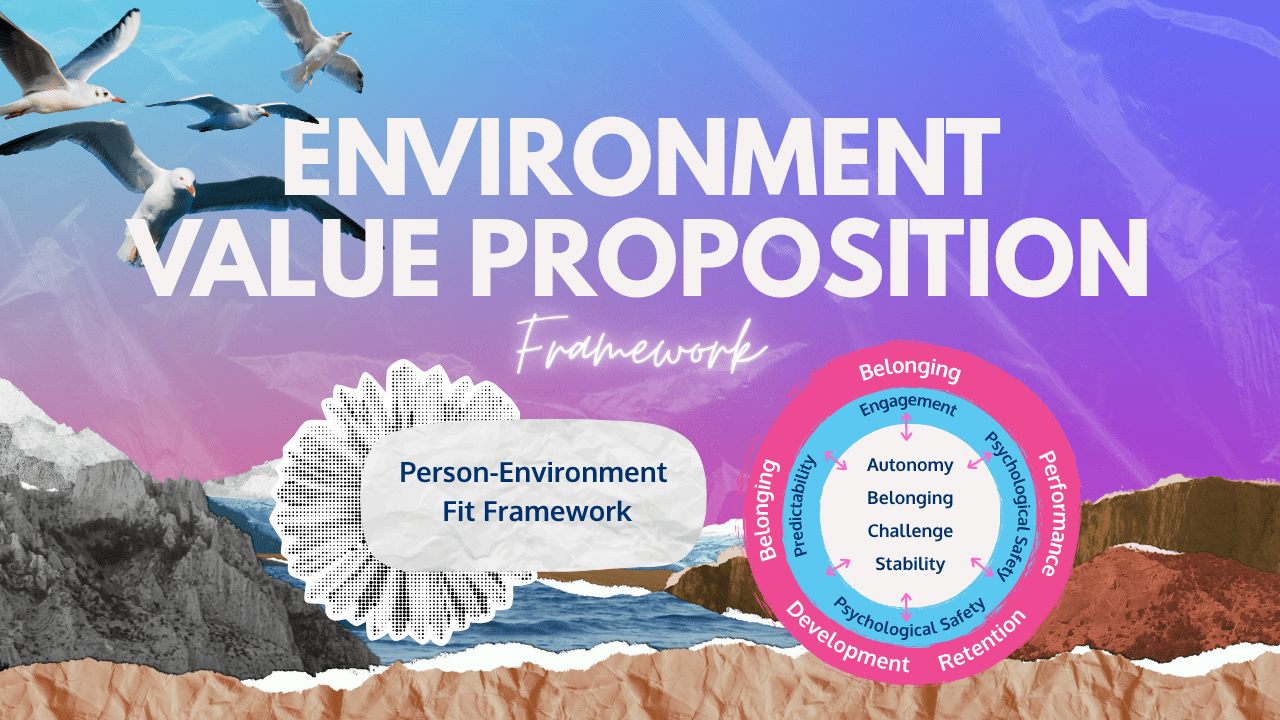
Lately, I’ve been hearing a lot of noise in the talent space about improving time-to-market and proving ROI when it comes to EVP development. And I’m not surprised. Research—and practitioner chatter—shows that EVP development is still a 6- to 12-month journey for many organizations (quite the range, right?). But here’s the kicker: even after the big “launch,” many teams struggle to get adoption from the business. Worse, they find themselves in rooms with execs, trying to explain the ROI with little more than brand campaign impressions or career site bounce rates to show for it. Recruitment marketing vendors tell us their clients face similar frustrations. Messaging needs to perform fast—especially with year-long media contracts on the line—but the EVP process isn’t moving at the pace the business needs. I get it. We lived through the same thing. A few years ago, our team at GBS took a hard look at this disconnect. We wanted to understand what was broken in the EVP process—and more importantly, why it kept breaking. And when we mapped it all out, the root cause was glaringly clear: the industry has been sold a backwards process. EVP ≠ CVP: Stop Treating EVP Like a Customer Proposition Somewhere along the way, EVP became a branding cousin to the Customer Value Proposition (CVP). On the surface, it makes sense—they both aim to communicate value. But here’s the thing: they are not the same. One sells a product. The other is meant to reflect a relationship. Here’s the issue with repackaging EVP into a neat little pitch to attract talent: it becomes just that—a pitch. But EVP is not designed to sell a job. It’s meant to hold a mirror the values alignment between a person and the environment in which they’ll work. When we treat EVP like a tagline or marketing copy,we reduce its strategic potential to just one piece of the funnel: attraction. That shortchanges the business. An effective EVP should be grounded in values, not verbiage. It should map what your environment gives (your mentor role—how values are lived out in the daily experience) and what your people get (their hero role—the opportunity to be their authentic selves, not a version they contort to “fit in”). If you do it right, they already fit in… and that’s kind of the point. EVP isn’t a campaign. It’s a commitment . Why We Call It an Environment Value Proposition Internally We’ve long referred to EVP as an “Employer Value Proposition,” but based on what we’ve seen across hundreds of client projects, a better term might be Environment Value Proposition. Here’s why that distinction matters: The workplace is a psychological environment just as much as it is a physical or cultural one. What employees value—autonomy, belonging, purpose, structure, innovation—is directly shaped by the environmental signals they receive. EVP should be the articulation of those signals, translated into values people can recognize, believe in, and align with. That’s why our framework centers on Person-Environment Fit (P-E Fit) —a well-researched construct in industrial-organizational psychology. Using models like Rauthmann’s (2020), we assess the dynamic between individuals and their working environment across dimensions like predictability, innovation, psychological safety, development, and value alignment. This isn’t guesswork. It’s evidence-based, actionable, and predictive of the outcomes we care most about: engagement, retention, and performance. The Danger of Starting with the Corporate Brand One of the biggest missteps we see in EVP projects is leading with the corporate or consumer brand. It makes sense on paper—after all, isn’t it easier to use what already exists? But here’s the truth: job seekers aren’t just customers. Their motivations are different. Their risks are higher. And the psychological drivers that lead to application, engagement, and retention don’t mirror buyer behavior. So when EVP is built as a spinoff of the corporate brand, the result is usually misalignment. And that misalignment? It costs real money . Let’s break it down: Disengagement costs companies roughly 34% of an employee’s salary in lost productivity—often well before someone leaves. Absenteeism drops by up to 37% when EVP efforts focus on psychological needs and values alignment. Voluntary turnover replacement costs average 50% of salary for entry-level roles, 150% for mid-level, and 250% for technical or executive roles. Retention of right-fit talent increases not just productivity, but also customer satisfaction, innovation velocity, and team cohesion. And more recent data backs this up: According to MIT Sloan Management Review (2022), when employees feel a strong sense of belonging: Job performance increases by 56% Sick days decrease by 75% Retention improves significantly The APA’s 2024 Work in America Survey found that employees in psychologically safe environments—where belonging and value alignment are high—are 10x less likely to describe their workplace as toxic, and 95% report feeling they belong (compared to just 69% in low-safety environments). Again, that misalignment? It costs real money and is eroding your budget.
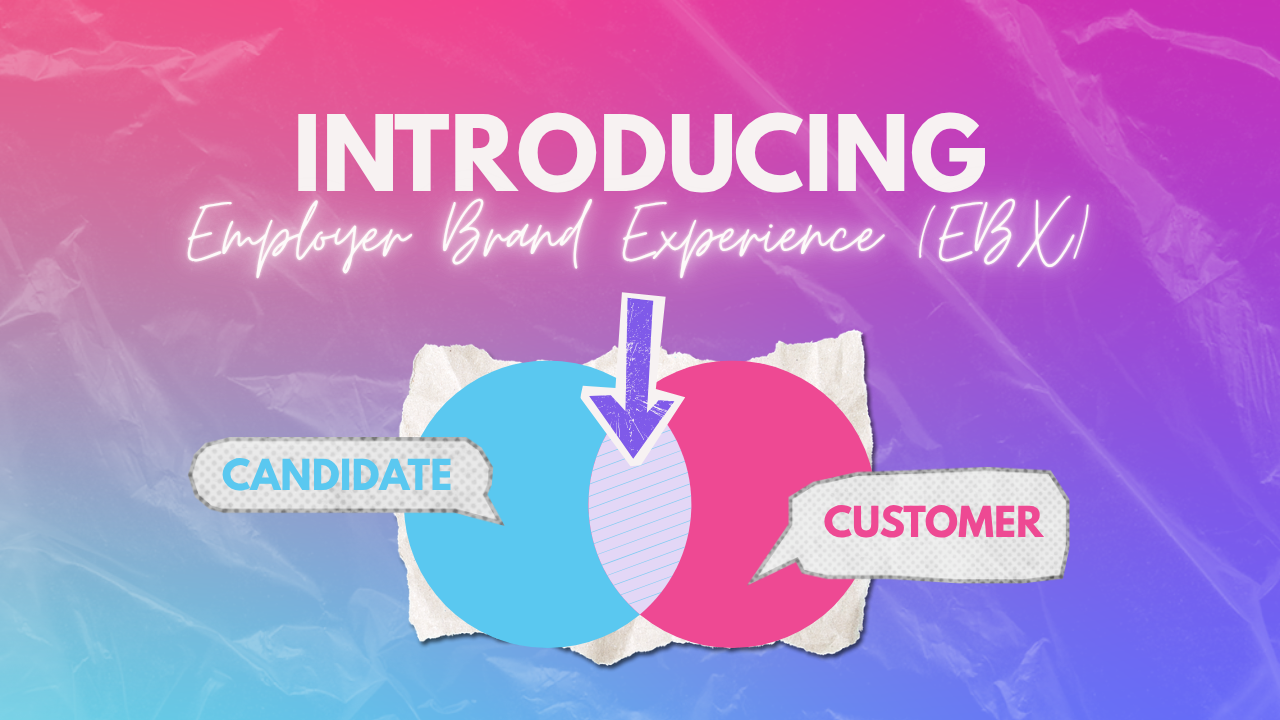
For many companies, there’s an often-overlooked overlap between the people you want to hire and the people you want to sell to. It’s not always direct—but it’s there. Sometimes they're the actual buyers. Sometimes they’re decision influencers. But either way, they’re watching. And if we’re being honest, most organizations still treat employer brand and recruitment marketing like they’re isolated from business performance. They're not. And it’s costing them—reputationally, financially, and competitively. What’s Broken—and What It’s Costing You In most companies, employer branding lives in HR, disconnected from brand strategy, customer experience, and financial outcomes. That’s a problem. Because what happens in your hiring funnel doesn’t stay there—it ripples through consumer sentiment, brand trust, and revenue opportunity. Disconnected candidate journeys → brand inconsistency → reputational risk. Poor candidate experiences → public backlash → customer loss. Siloed talent data → missed crossover insights → inefficient growth. TL;DR: Employer branding isn’t soft. When done right, it impacts hard business outcomes: CAC, retention, NPS, and even valuation. Curabitur placerat, nunc nec eleifend tincidunt, nibh nulla dictum turpis, vitae vulputate magna orci sed ex. Donec eleifend scelerisque leo nec eleifend. Vivamus volutpat dolor et velit fermentum aliquam sagittis felis vitae dictum aliquam. In hac habitasse platea dictumst ivamus malesuada tempor sem onec malesuada vestibulum accumsan. Cras sed odio vehicula, finibus ante at, fermentum libero. The Candidate–Customer Overlap Is Bigger Than You Think Let’s cut to it: employer brand still sits in the “nice to have” column at too many companies. TA is boxed in as a cost center. Recruitment marketing budgets? Usually the first to get axed in a downturn. But what if we reframed the work? If you recognize the candidate/customer overlap, your employer brand doesn’t just attract talent—it protects and amplifies revenue. Done right, it: 1. Reduces CAC (Customer Acquisition Cost): Great employer brand lowers friction and accelerates trust. 2. Strengthens brand equity: Even candidates you don’t hire can become advocates. 3. Unlocks loyalty loops: Former candidates can still buy from you, refer you, or influence buying decisions. Smart Framing: If candidates feel unseen or undervalued, they won’t just ghost your hiring process—they’ll ghost your brand. Revenue leakage from a bad hiring experience is real. TL;DR: Candidates who feel unseen or undervalued won’t just ghost your hiring process—they’ll ghost your brand. Studies have shown a positive correlation between strong employer branding and increased customer satisfaction, highlighting the impact of employee experience on customer loyalty. Introducing EBX: The Employer Brand Experience Framework This is where EBX comes in—our proprietary framework to unify brand, marketing, and talent into one measurable experience. EBX (Employer Brand Experience) isn’t just about better job ads or polished Glassdoor profiles. It’s the connective tissue between your external brand promise and the actual experience of moving through your hiring funnel. It’s how we bridge intent and impact—so candidates don’t just apply, they believe. And when they believe, they don’t just convert—they advocate. What EBX Is (and Isn't) 1. It is a revenue-aware framework that unites brand experience and hiring operations. 2. It is a way to apply lifecycle marketing and performance metrics to candidate engagement. 3. It is not a rebrand of EVP or a campaign wrapper. 4. It is not exclusive to HR—it’s a cross-functional strategy. EBX ties performance marketing to talent attraction by: 1. Mapping motivation to behavior (psychographics over demographics) 2. Aligning content with channel resonance (platform-specific AVPs) 3. Closing drop-off loops through lifecycle marketing 4. Re-engaging missed connections via retargeting and nurture flows Measuring success in revenue, not just reqs filled TL;DR: When EBX is activated, it delivers top-funnel efficiency, mid-funnel retention, and bottom-funnel loyalty—across both candidates and customers. Why EBX Matters Beyond HR Most business leaders agree: brand matters. Reputation matters. Trust matters. But here’s the blind spot—your employer brand impacts all three. EBX brings financial discipline to a part of the business that’s long been seen as "soft." It ties the experience of talent acquisition to measurable outcomes—customer retention, revenue efficiency, and even cost of capital through reputation impacts. This framework is designed not just for EB professionals, but for: 1. CPOs/CHROs who need to defend and drive investment in experience 2. CMOs who need to align brand trust across audiences 3. CFOs who want to understand the ROI of reputation and retention 4. COOs who care about funnel efficiency CEOs who want fewer silos and more strategic cohesion TL;DR: Think of EBX as the Net Promoter System for your employer brand—except we don’t stop at sentiment. We track how belief moves through your business, influences conversion, and impacts your P&L.; Where Brand and Talent Collide: Activating EBX 1. Build Shared Personas If your marketing team has ICPs (Ideal Customer Profiles), your TA team should have shared ITPs (Ideal Talent Profiles)—with crossover baked in. Ask: 1. Do your best hires look like your best customers? 2. Do you have candidates who already believe in your mission because they’ve experienced your product? 3. Can you use product loyalty as a sourcing signal? TL;DR: You can. And when you do, your funnel gets smarter. 2. Repurpose and Realign Content You’re sitting on a content mine—start mining it. 1. Turn EGC (employee-generated content) into brand stories 2. Use CSR, DEI, and purpose-led campaigns in recruiting 3. Translate customer storytelling into cultural proof points for candidates TL;DR: One video = customer proof + employer promise + pipeline accelerator. One narrative. Multiple conversions. 3. Treat Candidates Like Customers You wouldn't let a high-value lead go unanswered for 3 weeks. Why do that to a candidate? 1. Use CRM logic in TA (lifecycle, segmentation, triggered flows) 2. Map candidate journeys like buyer journeys 3. Respond like a brand that gives a damn TL;DR: Research from the Journal of Business Research shows candidate experience correlates with brand sentiment and purchase likelihood in shared audience pools (JBR, 2022). Measure What Matters—Revenue, Not Just Req Fills Most employer brand dashboards look like this: time-to-fill, source-of-hire, maybe a couple of social metrics. Fine—but incomplete. When your talent brand drives purchase behavior, your metrics have to scale up. With EBX, you measure: 1. NPS of the candidate journey 2. Post-application brand sentiment 3. Crossover conversion (candidates → customers, and vice versa) 4. Revenue impact of candidate experience on high-value audience segments TL;DR: EBX transforms employer branding from a qualitative exercise to a measurable business lever.
Suppose you believe everything you read on LinkedIn. In that case, AI is about to replace half your workforce, reinvent your go-to-market strategy, cure indecision, and do it all while writing perfect emails with zero typos. And don’t get me wrong, I’m an optimist when it comes to AI. I’ve seen firsthand how it can cut noise, speed up decisions, and automate the things we all hate doing. But there’s one tiny, inconvenient problem no one seems to be talking about. The power gap. As in, literal electricity. The AI Hype Train Has a Flat Tire (I know, trains don’t have tires. Just go with it.) We’ve been here before. New tech shows up, the early adopters build cool stuff, the consultants descend with acronyms and bold predictions, and someone announces that “the spreadsheet is dead.” But this time, there’s a twist. AI isn’t just software. It’s a software that eats hardware for breakfast. And that hardware eats a lot of electricity. Let’s math! In 2023, U.S. data centers consumed roughly 176 terawatt-hours (TWh) of electricity. For perspective, that’s about 4.4% of the entire U.S. power grid just for the data centers. Now fast forward to projections for 2028: that number could triple to between 325 and 580 TWh , or up to 12% of the grid . Much of that spike is coming from AI workloads. This isn’t theoretical. This is what happens when you train and run massive language models, fine-tune vertical instances, and let them spin 24/7 across global operations. Every time you ask an AI to “summarize this document,” or “generate 20 variations of ad copy,” it hits a GPU in a warehouse that’s pulling more juice than your average Walmart. And that, folks, is where the revolution slows down. Why Power Is the New Bottleneck We’ve been trained to think about AI limitations in terms of accuracy, bias, explainability, or hallucinations. Fair points, all of them. But the real choke point? It’s much less philosophical and way more operational. It’s the infrastructure. Let me give you a field-level view. Utility companies across the U.S. are now getting so many data center requests, each demanding energy on par with a small city, that they’re overwhelmed. The largest power grid in the country, PJM Interconnection, has seen data center demand spike so fast that they’re having to deny or delay new connections. Not because they don’t want to help tech companies, but because there’s no room on the grid to do it. PJM Interconnection has significantly increased its annual load growth forecast to 2.4%, primarily due to the rapid expansion of data centers and electrification efforts, up from the previous forecast of 0.8%. A study by Synapse Energy Economics projects that data center electricity consumption within PJM’s territory will escalate from 50 TWh in 2023 to 350 TWh by 2040. This would represent an increase from 6% to 24% of PJM’s total load. The rapid development of AI data centers is intensifying concerns about the U.S. electrical grid’s capacity. PJM Interconnection, covering 13 states and the District of Columbia, is experiencing significant pressures, especially in Virginia, where a large concentration of data centers is located. PJM’s recent capacity auction saw prices increase by over 800%, reflecting rising demand and shrinking supply. So while tech leaders are busy talking about how AI will “run the company of the future,” they might want to talk to their facilities team. You can’t run LLMs without juice. And the juice is running dry. This Isn’t Just a Tech Problem If you’re reading this from HR, Ops, or Talent, you might be thinking, “That’s interesting, but that’s not my problem.” But yeah, it is. If you’re responsible for implementing AI into business workflows, like recruiting, onboarding, workforce planning, scheduling, or training, then this limitation is yours, too. You’re betting on systems that assume infinite scale, when the back-end infrastructure is telling a different story. Take employer branding or recruiting automation. AI makes it easy to analyze a hundred thousand résumés, generate job posts, screen candidates, and schedule interviews. But multiply that across industries, companies, and geographies, and the load isn’t “automated,” it’s just outsourced to a server that’s burning fossil fuel at an alarming rate. If your vendor says their product is AI-powered, ask them two things: Where’s the model running? What’s the compute cost per transaction? Because if they’re scaling without energy awareness, you may be setting your systems up for a very slow fail. The False Promise of “Fully Automated” Here’s the other issue no one wants to say out loud. The vision of “AI doing everything for you” isn’t just flawed because of the computational limits. It’s flawed because AI systems need human input to stay useful. They drift. They degrade. They hallucinate. And they do all this faster as you scale them. Combine that with the power demands, and you’ve got a recipe for disaster if you try to fully automate complex operations without a plan for monitoring, validation, or resource availability . In other words: – AI won’t run ops without power. – Ops can’t run AI without oversight. – No one seems to be budgeting for either one. So, What Do You Do? I’m not here to tell you to stop using AI. In many ways, it has replaced the way we used to research and problem-solve, so it is too useful a tool to shed. But I’m suggesting that it’s time for operational leaders to: 1. Rethink “Scale” Ask whether your AI projects need to run everywhere all the time. Some use cases don’t need real-time answers. Some tasks don’t need to be run through a 70-billion parameter model. Simpler models, on-device compute, and scheduled batch jobs are all ways to reduce your footprint and your costs. 2. Audit Your AI Workflows Just like data hygiene matters in your ATS, AI hygiene matters too. Start tracking where AI is being used, how often, and what it costs in terms of compute. Ask your vendors about sustainability practices. If they look at you like you’re speaking Dutch, start looking for new vendors. 3. Partner with IT and Facilities This isn’t just a tech issue. This is an operational risk. Talk to your infrastructure team about what’s possible (and what’s not) in the next 2–5 years. Power, cooling, latency, and reliability all matter more than whatever the marketing deck says. 4. Build with Redundancy What happens when the model is slow, the API limit is hit, or the power flickers? If the answer is “everything breaks,” you don’t have a resilient system. You have a house of cards with a nice interface. 5. Push for Smart Regulation The conversation around AI regulation usually gets stuck in debates about ethics or jobs. But the infrastructure side needs just as much attention. Energy planning, clean grid investment, and better reporting requirements for cloud providers should all be on the radar of any company betting big on AI. Gen AI isn’t a magic trick. It’s a system of pipes, wires, chips, and models that consume real energy and generate real waste. The more we ask it to do, the more we have to be honest about what it costs, and whether we’re building sustainable systems to feed the beast. The future of work might be powered by AI. But the future of AI is going to depend on who pays the power bill. And if we’re not careful, we’ll build faster than we can sustain, and the lights might flicker out before the revolution can be televised.
Lately, I’ve been hearing a lot of noise in the talent space about improving time-to-market and proving ROI when it comes to EVP development. And I’m not surprised. Research—and practitioner chatter—shows that EVP development is still a 6- to 12-month journey for many organizations (quite the range, right?). But here’s the kicker: even after the big “launch,” many teams struggle to get adoption from the business. Worse, they find themselves in rooms with execs, trying to explain the ROI with little more than brand campaign impressions or career site bounce rates to show for it. Recruitment marketing vendors tell us their clients face similar frustrations. Messaging needs to perform fast—especially with year-long media contracts on the line—but the EVP process isn’t moving at the pace the business needs. I get it. We lived through the same thing. A few years ago, our team at GBS took a hard look at this disconnect. We wanted to understand what was broken in the EVP process—and more importantly, why it kept breaking. And when we mapped it all out, the root cause was glaringly clear: the industry has been sold a backwards process. EVP ≠ CVP: Stop Treating EVP Like a Customer Proposition Somewhere along the way, EVP became a branding cousin to the Customer Value Proposition (CVP). On the surface, it makes sense—they both aim to communicate value. But here’s the thing: they are not the same. One sells a product. The other is meant to reflect a relationship. Here’s the issue with repackaging EVP into a neat little pitch to attract talent: it becomes just that—a pitch. But EVP is not designed to sell a job. It’s meant to hold a mirror the values alignment between a person and the environment in which they’ll work. When we treat EVP like a tagline or marketing copy,we reduce its strategic potential to just one piece of the funnel: attraction. That shortchanges the business. An effective EVP should be grounded in values, not verbiage. It should map what your environment gives (your mentor role—how values are lived out in the daily experience) and what your people get (their hero role—the opportunity to be their authentic selves, not a version they contort to “fit in”). If you do it right, they already fit in… and that’s kind of the point. EVP isn’t a campaign. It’s a commitment . Why We Call It an Environment Value Proposition Internally We’ve long referred to EVP as an “Employer Value Proposition,” but based on what we’ve seen across hundreds of client projects, a better term might be Environment Value Proposition. Here’s why that distinction matters: The workplace is a psychological environment just as much as it is a physical or cultural one. What employees value—autonomy, belonging, purpose, structure, innovation—is directly shaped by the environmental signals they receive. EVP should be the articulation of those signals, translated into values people can recognize, believe in, and align with. That’s why our framework centers on Person-Environment Fit (P-E Fit) —a well-researched construct in industrial-organizational psychology. Using models like Rauthmann’s (2020), we assess the dynamic between individuals and their working environment across dimensions like predictability, innovation, psychological safety, development, and value alignment. This isn’t guesswork. It’s evidence-based, actionable, and predictive of the outcomes we care most about: engagement, retention, and performance. The Danger of Starting with the Corporate Brand One of the biggest missteps we see in EVP projects is leading with the corporate or consumer brand. It makes sense on paper—after all, isn’t it easier to use what already exists? But here’s the truth: job seekers aren’t just customers. Their motivations are different. Their risks are higher. And the psychological drivers that lead to application, engagement, and retention don’t mirror buyer behavior. So when EVP is built as a spinoff of the corporate brand, the result is usually misalignment. And that misalignment? It costs real money . Let’s break it down: Disengagement costs companies roughly 34% of an employee’s salary in lost productivity—often well before someone leaves. Absenteeism drops by up to 37% when EVP efforts focus on psychological needs and values alignment. Voluntary turnover replacement costs average 50% of salary for entry-level roles, 150% for mid-level, and 250% for technical or executive roles. Retention of right-fit talent increases not just productivity, but also customer satisfaction, innovation velocity, and team cohesion. And more recent data backs this up: According to MIT Sloan Management Review (2022), when employees feel a strong sense of belonging: Job performance increases by 56% Sick days decrease by 75% Retention improves significantly The APA’s 2024 Work in America Survey found that employees in psychologically safe environments—where belonging and value alignment are high—are 10x less likely to describe their workplace as toxic, and 95% report feeling they belong (compared to just 69% in low-safety environments). Again, that misalignment? It costs real money and is eroding your budget.
For many companies, there’s an often-overlooked overlap between the people you want to hire and the people you want to sell to. It’s not always direct—but it’s there. Sometimes they're the actual buyers. Sometimes they’re decision influencers. But either way, they’re watching. And if we’re being honest, most organizations still treat employer brand and recruitment marketing like they’re isolated from business performance. They're not. And it’s costing them—reputationally, financially, and competitively. What’s Broken—and What It’s Costing You In most companies, employer branding lives in HR, disconnected from brand strategy, customer experience, and financial outcomes. That’s a problem. Because what happens in your hiring funnel doesn’t stay there—it ripples through consumer sentiment, brand trust, and revenue opportunity. Disconnected candidate journeys → brand inconsistency → reputational risk. Poor candidate experiences → public backlash → customer loss. Siloed talent data → missed crossover insights → inefficient growth. TL;DR: Employer branding isn’t soft. When done right, it impacts hard business outcomes: CAC, retention, NPS, and even valuation. Curabitur placerat, nunc nec eleifend tincidunt, nibh nulla dictum turpis, vitae vulputate magna orci sed ex. Donec eleifend scelerisque leo nec eleifend. Vivamus volutpat dolor et velit fermentum aliquam sagittis felis vitae dictum aliquam. In hac habitasse platea dictumst ivamus malesuada tempor sem onec malesuada vestibulum accumsan. Cras sed odio vehicula, finibus ante at, fermentum libero. The Candidate–Customer Overlap Is Bigger Than You Think Let’s cut to it: employer brand still sits in the “nice to have” column at too many companies. TA is boxed in as a cost center. Recruitment marketing budgets? Usually the first to get axed in a downturn. But what if we reframed the work? If you recognize the candidate/customer overlap, your employer brand doesn’t just attract talent—it protects and amplifies revenue. Done right, it: 1. Reduces CAC (Customer Acquisition Cost): Great employer brand lowers friction and accelerates trust. 2. Strengthens brand equity: Even candidates you don’t hire can become advocates. 3. Unlocks loyalty loops: Former candidates can still buy from you, refer you, or influence buying decisions. Smart Framing: If candidates feel unseen or undervalued, they won’t just ghost your hiring process—they’ll ghost your brand. Revenue leakage from a bad hiring experience is real. TL;DR: Candidates who feel unseen or undervalued won’t just ghost your hiring process—they’ll ghost your brand. Studies have shown a positive correlation between strong employer branding and increased customer satisfaction, highlighting the impact of employee experience on customer loyalty. Introducing EBX: The Employer Brand Experience Framework This is where EBX comes in—our proprietary framework to unify brand, marketing, and talent into one measurable experience. EBX (Employer Brand Experience) isn’t just about better job ads or polished Glassdoor profiles. It’s the connective tissue between your external brand promise and the actual experience of moving through your hiring funnel. It’s how we bridge intent and impact—so candidates don’t just apply, they believe. And when they believe, they don’t just convert—they advocate. What EBX Is (and Isn't) 1. It is a revenue-aware framework that unites brand experience and hiring operations. 2. It is a way to apply lifecycle marketing and performance metrics to candidate engagement. 3. It is not a rebrand of EVP or a campaign wrapper. 4. It is not exclusive to HR—it’s a cross-functional strategy. EBX ties performance marketing to talent attraction by: 1. Mapping motivation to behavior (psychographics over demographics) 2. Aligning content with channel resonance (platform-specific AVPs) 3. Closing drop-off loops through lifecycle marketing 4. Re-engaging missed connections via retargeting and nurture flows Measuring success in revenue, not just reqs filled TL;DR: When EBX is activated, it delivers top-funnel efficiency, mid-funnel retention, and bottom-funnel loyalty—across both candidates and customers. Why EBX Matters Beyond HR Most business leaders agree: brand matters. Reputation matters. Trust matters. But here’s the blind spot—your employer brand impacts all three. EBX brings financial discipline to a part of the business that’s long been seen as "soft." It ties the experience of talent acquisition to measurable outcomes—customer retention, revenue efficiency, and even cost of capital through reputation impacts. This framework is designed not just for EB professionals, but for: 1. CPOs/CHROs who need to defend and drive investment in experience 2. CMOs who need to align brand trust across audiences 3. CFOs who want to understand the ROI of reputation and retention 4. COOs who care about funnel efficiency CEOs who want fewer silos and more strategic cohesion TL;DR: Think of EBX as the Net Promoter System for your employer brand—except we don’t stop at sentiment. We track how belief moves through your business, influences conversion, and impacts your P&L.; Where Brand and Talent Collide: Activating EBX 1. Build Shared Personas If your marketing team has ICPs (Ideal Customer Profiles), your TA team should have shared ITPs (Ideal Talent Profiles)—with crossover baked in. Ask: 1. Do your best hires look like your best customers? 2. Do you have candidates who already believe in your mission because they’ve experienced your product? 3. Can you use product loyalty as a sourcing signal? TL;DR: You can. And when you do, your funnel gets smarter. 2. Repurpose and Realign Content You’re sitting on a content mine—start mining it. 1. Turn EGC (employee-generated content) into brand stories 2. Use CSR, DEI, and purpose-led campaigns in recruiting 3. Translate customer storytelling into cultural proof points for candidates TL;DR: One video = customer proof + employer promise + pipeline accelerator. One narrative. Multiple conversions. 3. Treat Candidates Like Customers You wouldn't let a high-value lead go unanswered for 3 weeks. Why do that to a candidate? 1. Use CRM logic in TA (lifecycle, segmentation, triggered flows) 2. Map candidate journeys like buyer journeys 3. Respond like a brand that gives a damn TL;DR: Research from the Journal of Business Research shows candidate experience correlates with brand sentiment and purchase likelihood in shared audience pools (JBR, 2022). Measure What Matters—Revenue, Not Just Req Fills Most employer brand dashboards look like this: time-to-fill, source-of-hire, maybe a couple of social metrics. Fine—but incomplete. When your talent brand drives purchase behavior, your metrics have to scale up. With EBX, you measure: 1. NPS of the candidate journey 2. Post-application brand sentiment 3. Crossover conversion (candidates → customers, and vice versa) 4. Revenue impact of candidate experience on high-value audience segments TL;DR: EBX transforms employer branding from a qualitative exercise to a measurable business lever.
Suppose you believe everything you read on LinkedIn. In that case, AI is about to replace half your workforce, reinvent your go-to-market strategy, cure indecision, and do it all while writing perfect emails with zero typos. And don’t get me wrong, I’m an optimist when it comes to AI. I’ve seen firsthand how it can cut noise, speed up decisions, and automate the things we all hate doing. But there’s one tiny, inconvenient problem no one seems to be talking about. The power gap. As in, literal electricity. The AI Hype Train Has a Flat Tire (I know, trains don’t have tires. Just go with it.) We’ve been here before. New tech shows up, the early adopters build cool stuff, the consultants descend with acronyms and bold predictions, and someone announces that “the spreadsheet is dead.” But this time, there’s a twist. AI isn’t just software. It’s a software that eats hardware for breakfast. And that hardware eats a lot of electricity. Let’s math! In 2023, U.S. data centers consumed roughly 176 terawatt-hours (TWh) of electricity. For perspective, that’s about 4.4% of the entire U.S. power grid just for the data centers. Now fast forward to projections for 2028: that number could triple to between 325 and 580 TWh , or up to 12% of the grid . Much of that spike is coming from AI workloads. This isn’t theoretical. This is what happens when you train and run massive language models, fine-tune vertical instances, and let them spin 24/7 across global operations. Every time you ask an AI to “summarize this document,” or “generate 20 variations of ad copy,” it hits a GPU in a warehouse that’s pulling more juice than your average Walmart. And that, folks, is where the revolution slows down. Why Power Is the New Bottleneck We’ve been trained to think about AI limitations in terms of accuracy, bias, explainability, or hallucinations. Fair points, all of them. But the real choke point? It’s much less philosophical and way more operational. It’s the infrastructure. Let me give you a field-level view. Utility companies across the U.S. are now getting so many data center requests, each demanding energy on par with a small city, that they’re overwhelmed. The largest power grid in the country, PJM Interconnection, has seen data center demand spike so fast that they’re having to deny or delay new connections. Not because they don’t want to help tech companies, but because there’s no room on the grid to do it. PJM Interconnection has significantly increased its annual load growth forecast to 2.4%, primarily due to the rapid expansion of data centers and electrification efforts, up from the previous forecast of 0.8%. A study by Synapse Energy Economics projects that data center electricity consumption within PJM’s territory will escalate from 50 TWh in 2023 to 350 TWh by 2040. This would represent an increase from 6% to 24% of PJM’s total load. The rapid development of AI data centers is intensifying concerns about the U.S. electrical grid’s capacity. PJM Interconnection, covering 13 states and the District of Columbia, is experiencing significant pressures, especially in Virginia, where a large concentration of data centers is located. PJM’s recent capacity auction saw prices increase by over 800%, reflecting rising demand and shrinking supply. So while tech leaders are busy talking about how AI will “run the company of the future,” they might want to talk to their facilities team. You can’t run LLMs without juice. And the juice is running dry. This Isn’t Just a Tech Problem If you’re reading this from HR, Ops, or Talent, you might be thinking, “That’s interesting, but that’s not my problem.” But yeah, it is. If you’re responsible for implementing AI into business workflows, like recruiting, onboarding, workforce planning, scheduling, or training, then this limitation is yours, too. You’re betting on systems that assume infinite scale, when the back-end infrastructure is telling a different story. Take employer branding or recruiting automation. AI makes it easy to analyze a hundred thousand résumés, generate job posts, screen candidates, and schedule interviews. But multiply that across industries, companies, and geographies, and the load isn’t “automated,” it’s just outsourced to a server that’s burning fossil fuel at an alarming rate. If your vendor says their product is AI-powered, ask them two things: Where’s the model running? What’s the compute cost per transaction? Because if they’re scaling without energy awareness, you may be setting your systems up for a very slow fail. The False Promise of “Fully Automated” Here’s the other issue no one wants to say out loud. The vision of “AI doing everything for you” isn’t just flawed because of the computational limits. It’s flawed because AI systems need human input to stay useful. They drift. They degrade. They hallucinate. And they do all this faster as you scale them. Combine that with the power demands, and you’ve got a recipe for disaster if you try to fully automate complex operations without a plan for monitoring, validation, or resource availability . In other words: – AI won’t run ops without power. – Ops can’t run AI without oversight. – No one seems to be budgeting for either one. So, What Do You Do? I’m not here to tell you to stop using AI. In many ways, it has replaced the way we used to research and problem-solve, so it is too useful a tool to shed. But I’m suggesting that it’s time for operational leaders to: 1. Rethink “Scale” Ask whether your AI projects need to run everywhere all the time. Some use cases don’t need real-time answers. Some tasks don’t need to be run through a 70-billion parameter model. Simpler models, on-device compute, and scheduled batch jobs are all ways to reduce your footprint and your costs. 2. Audit Your AI Workflows Just like data hygiene matters in your ATS, AI hygiene matters too. Start tracking where AI is being used, how often, and what it costs in terms of compute. Ask your vendors about sustainability practices. If they look at you like you’re speaking Dutch, start looking for new vendors. 3. Partner with IT and Facilities This isn’t just a tech issue. This is an operational risk. Talk to your infrastructure team about what’s possible (and what’s not) in the next 2–5 years. Power, cooling, latency, and reliability all matter more than whatever the marketing deck says. 4. Build with Redundancy What happens when the model is slow, the API limit is hit, or the power flickers? If the answer is “everything breaks,” you don’t have a resilient system. You have a house of cards with a nice interface. 5. Push for Smart Regulation The conversation around AI regulation usually gets stuck in debates about ethics or jobs. But the infrastructure side needs just as much attention. Energy planning, clean grid investment, and better reporting requirements for cloud providers should all be on the radar of any company betting big on AI. Gen AI isn’t a magic trick. It’s a system of pipes, wires, chips, and models that consume real energy and generate real waste. The more we ask it to do, the more we have to be honest about what it costs, and whether we’re building sustainable systems to feed the beast. The future of work might be powered by AI. But the future of AI is going to depend on who pays the power bill. And if we’re not careful, we’ll build faster than we can sustain, and the lights might flicker out before the revolution can be televised.
Lately, I’ve been hearing a lot of noise in the talent space about improving time-to-market and proving ROI when it comes to EVP development. And I’m not surprised. Research—and practitioner chatter—shows that EVP development is still a 6- to 12-month journey for many organizations (quite the range, right?). But here’s the kicker: even after the big “launch,” many teams struggle to get adoption from the business. Worse, they find themselves in rooms with execs, trying to explain the ROI with little more than brand campaign impressions or career site bounce rates to show for it. Recruitment marketing vendors tell us their clients face similar frustrations. Messaging needs to perform fast—especially with year-long media contracts on the line—but the EVP process isn’t moving at the pace the business needs. I get it. We lived through the same thing. A few years ago, our team at GBS took a hard look at this disconnect. We wanted to understand what was broken in the EVP process—and more importantly, why it kept breaking. And when we mapped it all out, the root cause was glaringly clear: the industry has been sold a backwards process. EVP ≠ CVP: Stop Treating EVP Like a Customer Proposition Somewhere along the way, EVP became a branding cousin to the Customer Value Proposition (CVP). On the surface, it makes sense—they both aim to communicate value. But here’s the thing: they are not the same. One sells a product. The other is meant to reflect a relationship. Here’s the issue with repackaging EVP into a neat little pitch to attract talent: it becomes just that—a pitch. But EVP is not designed to sell a job. It’s meant to hold a mirror the values alignment between a person and the environment in which they’ll work. When we treat EVP like a tagline or marketing copy,we reduce its strategic potential to just one piece of the funnel: attraction. That shortchanges the business. An effective EVP should be grounded in values, not verbiage. It should map what your environment gives (your mentor role—how values are lived out in the daily experience) and what your people get (their hero role—the opportunity to be their authentic selves, not a version they contort to “fit in”). If you do it right, they already fit in… and that’s kind of the point. EVP isn’t a campaign. It’s a commitment . Why We Call It an Environment Value Proposition Internally We’ve long referred to EVP as an “Employer Value Proposition,” but based on what we’ve seen across hundreds of client projects, a better term might be Environment Value Proposition. Here’s why that distinction matters: The workplace is a psychological environment just as much as it is a physical or cultural one. What employees value—autonomy, belonging, purpose, structure, innovation—is directly shaped by the environmental signals they receive. EVP should be the articulation of those signals, translated into values people can recognize, believe in, and align with. That’s why our framework centers on Person-Environment Fit (P-E Fit) —a well-researched construct in industrial-organizational psychology. Using models like Rauthmann’s (2020), we assess the dynamic between individuals and their working environment across dimensions like predictability, innovation, psychological safety, development, and value alignment. This isn’t guesswork. It’s evidence-based, actionable, and predictive of the outcomes we care most about: engagement, retention, and performance. The Danger of Starting with the Corporate Brand One of the biggest missteps we see in EVP projects is leading with the corporate or consumer brand. It makes sense on paper—after all, isn’t it easier to use what already exists? But here’s the truth: job seekers aren’t just customers. Their motivations are different. Their risks are higher. And the psychological drivers that lead to application, engagement, and retention don’t mirror buyer behavior. So when EVP is built as a spinoff of the corporate brand, the result is usually misalignment. And that misalignment? It costs real money . Let’s break it down: Disengagement costs companies roughly 34% of an employee’s salary in lost productivity—often well before someone leaves. Absenteeism drops by up to 37% when EVP efforts focus on psychological needs and values alignment. Voluntary turnover replacement costs average 50% of salary for entry-level roles, 150% for mid-level, and 250% for technical or executive roles. Retention of right-fit talent increases not just productivity, but also customer satisfaction, innovation velocity, and team cohesion. And more recent data backs this up: According to MIT Sloan Management Review (2022), when employees feel a strong sense of belonging: Job performance increases by 56% Sick days decrease by 75% Retention improves significantly The APA’s 2024 Work in America Survey found that employees in psychologically safe environments—where belonging and value alignment are high—are 10x less likely to describe their workplace as toxic, and 95% report feeling they belong (compared to just 69% in low-safety environments). Again, that misalignment? It costs real money and is eroding your budget.